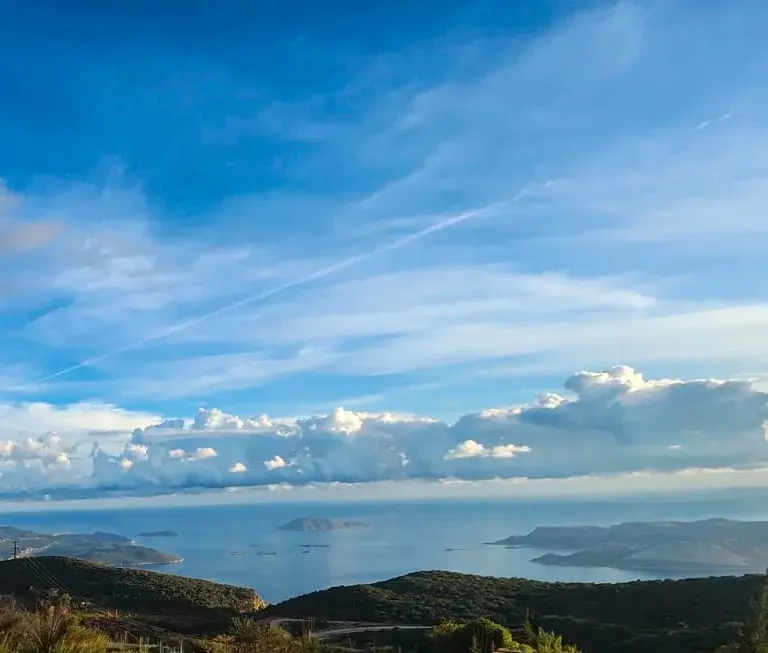
Lycian Way coastal path near ancient ruins, Kaş, Turkey
History & Culture

Ancient Cities of Lycia

Five UNESCO-grade sites within 45 minutes. Xanthos, Patara, Letoon, Myra, and Antiphellos — the Lycian heritage decoded with insider depth.

20 min readMarch 2026Lycian Collection

The Lycian Coast: A Living Archaeological Landscape

The 120 km coastline between Fethiye and Antalya contains a density of ancient cities unmatched anywhere else in Turkey. Within 45 minutes of Kaş, there are three UNESCO World Heritage Sites, a church containing the tomb of the historical Santa Claus, cliff faces carved with hundreds of tombs, a submerged city visible through glass-clear water, and the only surviving purpose-built parliament building from the ancient world.

The Lycians were not Greeks, not Romans, not Persians — they were a distinct Anatolian civilisation with their own language, their own democratic federation, and their own extraordinary funerary architecture. Their city-states formed the Lycian League in the 2nd century BC: a federal democratic system with weighted voting, separation of powers, and elected representatives from 23 cities. Modern historians consider it the most sophisticated democratic institution between ancient Athens and the formation of the United States.

What makes this coast exceptional for the culturally curious traveller is not just the quality of the sites — it is the fact that they remain dramatically undervisited. Xanthos and Letoon, both UNESCO World Heritage, rarely see more than 50 visitors on any given day. The Harpy Tomb at Xanthos, which would draw thousands per hour at Pompeii, can be contemplated in solitude.

3

UNESCO Sites

Xanthos, Letoon, Patara beach

2,800+

Years of history

From 8th century BC

45 min

Max drive from Kaş

To all five sites

The Five Sites

Patara

UNESCO

Ancient Patara

Capital of the Lycian League · Birthplace of St Nicholas · 18 km UNESCO Beach

Moderate crowds

Former capital of Lycia, seat of the Lycian Oracle, and birthplace of St Nicholas (the historical Santa Claus)

Period

7th century BC – 7th century AD

Visit Time

3–4 hours (ruins) + full day with beach

Best Season

April–June, September–October · Arrive before 09:30

Plus Code

6H3P+WH Gelemiş

Patara was not merely an ancient city — it was the federal capital of the Lycian League, the port from which St Paul embarked for Rome, and the oracle site rivalling Delphi in the ancient world. Today it remains substantially unexcavated: only 10–15% of the city has been exposed. What has been uncovered rivals the showpiece sites of western Turkey: a magnificent Roman granary, the only known purpose-built parliament building from the ancient world (the Bouleuterion), a triple-arched triumphal gate, a 6,000-seat theatre, baths, and a lighthouse road. Behind the ruins, the Eşen River delta opens onto the 18 km UNESCO-protected Patara beach — the longest natural beach on the Turkish Mediterranean and among the cleanest in Europe. Caretta caretta sea turtles have nested here since antiquity.

Xanthos

UNESCO

Ancient Xanthos (Arna)

UNESCO World Heritage · Capital of ancient Lycia · Harpy Tomb · Lycian inscriptions

Low crowds

Capital of the Lycian state and the most important political centre of ancient Lycia; twice destroyed and rebuilt, twice choosing collective death over surrender

Period

8th century BC – 6th century AD

Visit Time

2–3 hours

Best Season

April–June, September–November · Morning for best photography

Plus Code

7H8P+QJ Kınık

Xanthos is one of antiquity's most dramatic stories. Capital of the Lycian League, seat of the Xanthian kings, and twice the scene of extraordinary collective resistance: in 546 BC against Persian forces under Harpagus, and again in 42 BC against Brutus's Roman legions, the Xanthians chose to burn their city and kill themselves rather than submit. The ruins reflect these epochs in layered form: Lycian pillar tombs and sarcophagi, a Hellenistic agora, Roman theatre, and the famous Harpy Tomb — whose marble friezes were removed to the British Museum in 1842 (the current monument has exact replicas). The Nereid Monument, one of antiquity's most celebrated sculptural achievements, was also removed to London; its reconstructed podium stands in the agora. What makes Xanthos exceptional is not just the monuments but the continuity of occupation — a city that was the centre of Lycian identity for over a thousand years.

Letoon

UNESCO

Letoon (Sacred Sanctuary)

UNESCO · Spiritual heart of Lycia · Three temples · Sacred springs · Bird migration hotspot

Low crowds

The sacred federal sanctuary of the Lycian League, dedicated to the goddess Leto (mother of Apollo and Artemis) — the spiritual counterpart to administrative Xanthos

Period

7th century BC – 7th century AD

Visit Time

1–1.5 hours

Best Season

October–March for bird migration · April–May for spring atmosphere · Golden hour (17:00–19:00) for reflections

Plus Code

7H5P+G4 Bozöyük

Of all the ancient sites near Kaş, Letoon is the most otherworldly. Three Hellenistic temples — dedicated to Leto, Artemis, and Apollo — stand partially submerged in an ancient spring-fed lake, their marble columns reflected in water so clear you can see the mosaic floors at 2–3 metres depth. The sacred spring has been flowing continuously for 2,500 years. Letoon was the religious capital of the Lycian League — where league decisions were ratified by the priests of Leto, and where offerings from all 23 member cities were brought. The site's discovery in the 1960s revealed the trilingual Letoon inscription (in Lycian, Greek, and Aramaic), which finally allowed scholars to decipher the Lycian alphabet. Today the surrounding wetlands are an internationally significant bird migration waypoint, and the reed beds around the sacred spring host extraordinary numbers of raptors and waders in October and March.

Antiphellos

Antiphellos (Ancient Kaş)

Walkable from Kaş town centre · Lycian tombs · Hellenistic theatre · Rock inscriptions

Low crowds

The ancient port city of the Çukurbağ Peninsula, later renamed Kaş; its monuments are integrated directly into the fabric of the modern town

Period

4th century BC – 6th century AD

Visit Time

1–2 hours (walkable from town)

Best Season

Early morning or late afternoon · Avoid midday heat in summer

Plus Code

6H2P+8G Kaş

Most visitors to Kaş walk past the ancient city of Antiphellos without realising it. The Hellenistic theatre at the western end of the harbour promenade — intact to a remarkable degree — sits within a short walk of the Tuesday market. Above the town, carved directly into the cliff face, are the Lion Tomb and the Doric Tomb: Lycian sarcophagi and pillar tombs that formed the necropolis of ancient Antiphellos. The theatre is small (1,500 seats) but perfectly formed — its upper tiers offer the same view across Kaş Bay and toward Kastellorizo that it has offered since the 4th century BC. In the streets around the harbour, Lycian sarcophagi appear unexpectedly in private gardens, at road junctions, and between modern shops. Antiphellos did not end — it simply became Kaş.

Myra & Demre

Ancient Myra · Church of St Nicholas

Spectacular rock tombs · Santa Claus church · Sunken city of Kekova by boat

High crowds

One of the six principle cities of the Lycian League; the episcopal seat of St Nicholas of Myra (Santa Claus); its Byzantine church is among the most important early Christian sites in Turkey

Period

5th century BC – 14th century AD

Visit Time

3–4 hours (site) + half day for Kekova boat trip

Best Season

April–June, October–November · Avoid August peak crowds

Plus Code

6H4V+3J Demre

Myra presents two extraordinary experiences that are independent but best combined. The ancient city — now largely buried under the modern town of Demre — is famous primarily for its necropolis: a vertical cliff face pierced by hundreds of Lycian rock tombs cut directly into the limestone at multiple heights. They are the most visually dramatic rock-cut tombs in Lycia, their painted exteriors still showing traces of colour after 2,400 years. At their feet, a well-preserved Roman theatre seats 11,000. Separate from the archaeological site, the Church of St Nicholas in central Demre is the burial place of the historical Bishop Nicholas of Myra (270–343 AD) — the figure whose generosity to the poor became the foundation of the Santa Claus legend. The Byzantine basilica, partially restored, contains his original tomb and frescoes. Nearby Kekova island (accessible by boat from Kaş, Çayağzı, or Üçağız) offers the unforgettable experience of snorkelling above a Lycian city submerged by earthquakes in the 2nd century AD.

Recommended 3-Day Itinerary

Day 1

Patara: Ruins + Beach

Arrive at Patara ruins at 08:00. 2–3 hours in the city, then walk directly to the beach via the lighthouse path for a morning swim. Afternoon: slow beach walk. Drive back via the Eşen Valley at sunset.

Day 2

Xanthos + Letoon Half-Day

Drive to Xanthos at 09:00. 2 hours in the ruins. Lunch in Kınık village. Letoon at 14:00 — spend the afternoon by the sacred spring. Time your exit for 17:30 when the reflected light on the temples is extraordinary.

Day 3

Myra + Kekova

Morning at Myra rock tombs and Church of St Nicholas (09:00–12:00). Lunch in Demre. Afternoon: private boat from Çayağzı or Üçağız to Kekova sunken city and Simena castle. Return to Kaş for dinner at sunset.

Ancient Cities FAQ

The questions we hear most from guests arriving to explore Lycia.

What ancient ruins are near Kaş and Kalkan?

The region contains extraordinary ancient sites: Patara (Lycian capital, Parliament of Lycia), Xanthos (UNESCO World Heritage, Lycian capital), Letoon (sacred sanctuary, UNESCO), Antiphellos (ancient Kaş), and Myra (St Nicholas church, spectacular rock tombs) — all within a 45-minute drive of Kaş.

Is Patara worth visiting?

Patara is among the most significant and undervisited ancient cities in Turkey. As the former capital of the Lycian League and birthplace of St Nicholas, it combines a largely unexcavated Roman city with the UNESCO-protected 18km beach. The early morning before tour groups arrive is exceptional.

How many days do I need to see Lycian ruins near Kaş?

Three days allows you to see all major sites comfortably: Day 1 — Patara ruins and beach. Day 2 — Xanthos and Letoon (combine in one half-day). Day 3 — Myra and Kekova (sunken city by boat). Antiphellos (ancient Kaş) can be explored on foot any evening.

Who were the Lycians?

The Lycians were an ancient Anatolian people who occupied southwestern Turkey (ancient Lycia) from at least the 14th century BC. They developed a unique federation of city-states — the Lycian League — that modern historians consider a prototype for federal democratic governance. Alexander the Great encountered them in 334 BC; they later became Roman subjects but maintained cultural autonomy. Their distinctive rock-cut tombs, carved language, and democratic institutions make them one of antiquity's most fascinating civilisations.